

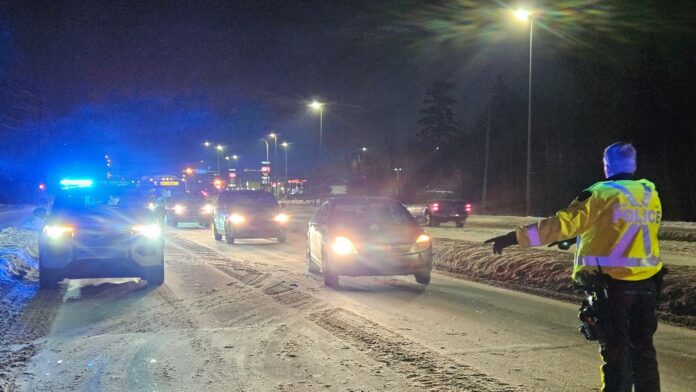

Mounties say four deaths due to collisions on Alberta’s roadways have occurred in the first four days of this month.
Those reports follow a sharp increase in fatal collisions in December and as a result police are reinforcing the need for safe driving practices in winter conditions. Alberta RCMP Corporal Troy Savinkoff, Public Information Officer with the Central Alberta District, advises everyone to drive well below the speed limit and give yourself lots of time to reach your destination. He says “people that are in a hurry tend to push their limits and that’s what tends to get them into trouble. Know that black ice is always a factor in winter. So don’t ever hit the brakes too fast. Always kind of feather the brakes as you are slowing down or accelerating. Do everything in a very purposeful, slow, controlled fashion when you are dealing with slippery roads.”
According to Savinkoff, there were 20 deaths on Alberta RCMP patrolled roadways in December which was above the 10-year average across K Division of about 16 for that month and inclement road conditions played significant role in many of those fatal collisions. Savinkoff notes the Central Alberta District goes from Olds right up until before Mayerthorpe covering Parkland RCMP jurisdiction, Morinville. RCMP issued multiple road advisories for poor winter driving conditions all around the province last month. Savinkoff adds, RCMP cover approximately 40 per cent of the population and 95 per cent of the geography in Alberta. No conversation about collisions and fatals is complete without RCMP talking about impaired driving. Savinkoff says “we know that impaired driving contributes to 25 to 30 per cent of all fatal collisions – no matter what time of year. Certainly, if you’re already impaired by alcohol your ability to navigate slippery roads is that much worse. So, we’ll always talk about impaired driving and the need to eliminate that from Alberta roads.”
A large incident on the QEII Highway saw 80 vehicles in the ditches in Airdrie on December 17th and throughout the month there were a number of days with poor driving conditions across the province. In one particular case, he highlights the fact that somebody had put their vehicle in the ditch, they hadn’t called police, and had left it vacant. Savinkoff says “for us when we came across that vehicle – because at some point it becomes a matter of public safety where we now are going to every single vehicle to ensure no one is inside, to make sure everybody is safe. We see an unoccupied vehicle, we see foot prints leading away from that vehicle now we’re like okay are we in a rescue situation? We don’t know where this person is, are they out on some roadway freezing, right?” He says “our emergency responders who are already dealing with the collisions are now involved in a search for a potential missing person that could be in distress. In the end, that person had been picked up and just hadn’t alerted (it) to us. So make sure you call the police, make sure you notify us where you are so that we know you are safe and, again, prepare for the potential that you might be involved in one of these large scale incidents and you may have to stay with your vehicle for some time.”
Motorists are advised by RCMP to pack extra winter clothes and blankets, always make sure you have lots of gas in your vehicle, equip it with winter tires, and have your phone fully charged before heading out. Keep up with weather forecasts and also check 511 Alberta for the latest current road conditions along your travel route. Stopping in the nearest community during a winter storm and waiting for road conditions to improve is another strategy to help you arrive home safely as well.